
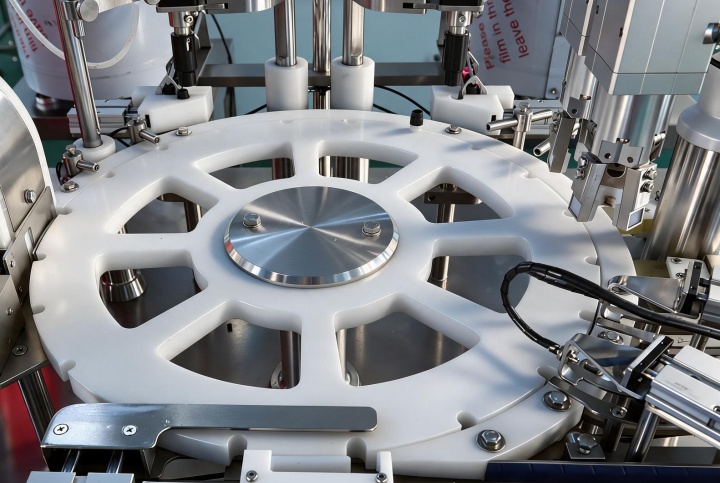
EU GMP Annex 1 Requirements for Sterile Filling Machine: A Complete Guide for Pharmaceutical Manufacturers
The release of the revised EU GMP Annex 1 – Manufacture of Sterile Medicinal Products has significantly raised the standards for aseptic pharmaceutical manufacturing. For pharmaceutical companies investing in sterile production lines, choosing a sterile filling machine that complies with Annex 1 requirements is essential for ensuring product quality, regulatory compliance, and successful inspections.
This article explains the key requirements of EU GMP Annex 1 for sterile filling machines and highlights the design features manufacturers should consider when selecting aseptic filling equipment.
What Is EU GMP Annex 1?
EU GMP Annex 1 is part of the European Union’s Good Manufacturing Practice (GMP) guidelines for sterile medicinal products. The updated version emphasizes:
- Contamination Control Strategy (CCS)
- Risk-based manufacturing
- Enhanced environmental monitoring
- Automation and digital data integrity
- Sterility assurance throughout the manufacturing process
- Although Annex 1 is a European regulation, many pharmaceutical manufacturers worldwide—including those exporting to Europe—follow its requirements.
Why Is Annex 1 Important for Sterile Filling Machines?
The sterile filling process is one of the highest-risk stages in pharmaceutical manufacturing because the product is exposed to the environment before final container closure.
According to Annex 1, sterile filling equipment should be designed to minimize contamination risks by:
- Reducing human intervention
- Maintaining Grade A aseptic conditions
- Supporting validated sterilization processes
- Preventing cross-contamination
- Ensuring complete process traceability
- As a result, modern sterile filling machines are expected to integrate advanced automation, contamination control, and validation-friendly designs.
Key EU GMP Annex 1 Requirements for Sterile Filling Machines
1. Contamination Control Strategy (CCS)
One of the biggest changes in the revised Annex 1 is the introduction of a comprehensive Contamination Control Strategy (CCS).
A sterile filling machine should support CCS by providing:
| 1 | Closed product pathways |
| 2 | Sterile product contact parts |
| 3 | Controlled airflow |
| 4 | Automated filling operations |
| 5 | Easy cleaning and sterilization |
| 6 | Minimal manual intervention |
| 7 | The machine design should become an integral part of the facility’s overall contamination control program. |
2. Grade A Protection with Grade B Background
Annex 1 requires aseptic filling operations to be performed under Grade A airflow with an appropriate Grade B cleanroom background.
Typical solutions include:
- Restricted Access Barrier Systems (RABS)
- Closed RABS
- Isolator technology
- Laminar airflow systems
- The filling machine should maintain unidirectional airflow across critical zones while minimizing turbulence.
3. Automation to Reduce Human Intervention
Human operators remain the largest source of contamination in sterile manufacturing.
Annex 1 strongly encourages increased automation, including:
Automatic bottle feeding →Automatic filling → Automatic stopper insertion→ Automatic capping→ Automatic reject systems→ Vision inspection→ Robotic handling where applicable
Reducing manual operations significantly lowers contamination risk while improving production consistency.
4. CIP/SIP Compatibility
Sterile filling machines should support effective cleaning and sterilization procedures.
Recommended features include:
- Clean-in-Place (CIP)
- Sterilize-in-Place (SIP)
- Steam sterilization
- Sterile product piping
- Sanitary valve design
- Hygienic dead-leg-free construction
These features simplify validation while improving cleaning repeatability.
5. Hygienic Machine Design
Machine construction plays an important role in contamination prevention.
Annex 1-compliant sterile filling machines generally feature:
- Stainless steel 316L product contact parts
- Electropolished surfaces
- FDA-compliant seals and tubing
- Crevice-free construction
- Easy accessibility for cleaning
- Sloped surfaces to prevent liquid accumulation
Every design detail should facilitate cleaning and eliminate contamination traps.
6. Process Monitoring and Data Integrity
Modern sterile filling machines should support electronic data recording in accordance with GMP data integrity principles.
Important functions include:
- Batch records
- Alarm history
- Audit trail
- User access management
- Recipe management
- Electronic signatures (when required)
- Compliance with 21 CFR Part 11 where applicable
- Integrated PLC and HMI systems help improve traceability throughout production.
7. Environmental Monitoring Integration
Annex 1 requires continuous environmental monitoring during aseptic manufacturing.
Sterile filling machines should allow integration with:
- Non-viable particle monitoring
- Viable particle sampling
- Airflow monitoring
- Differential pressure monitoring
- Temperature and humidity monitoring
Real-time monitoring helps ensure that aseptic conditions remain within validated limits.
8. Validation and Qualification Support
The equipment supplier should provide documentation that supports qualification activities, including:
- Design Qualification (DQ)
- Factory Acceptance Test (FAT)
- Site Acceptance Test (SAT)
- Installation Qualification (IQ)
- Operational Qualification (OQ)
- Performance Qualification (PQ)
Comprehensive documentation simplifies project validation and regulatory inspections.


