
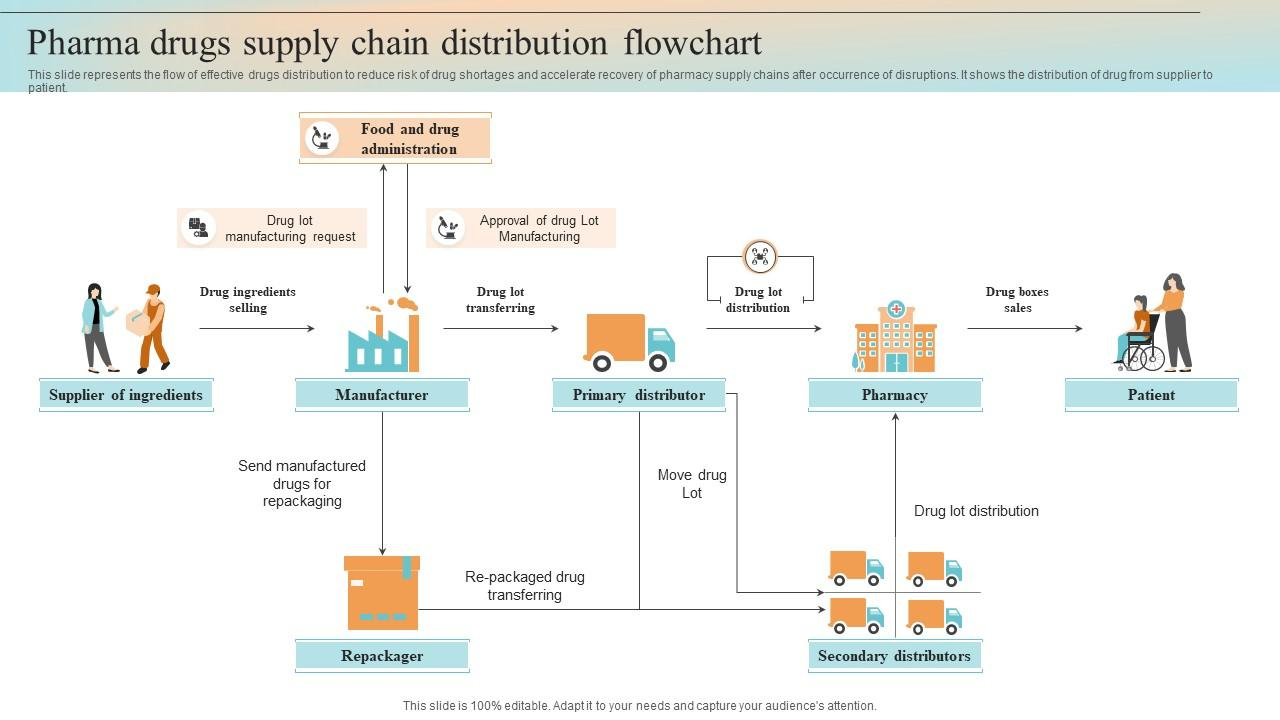
A pharmaceutical track-and-trace flowchart follows a medication from the factory floor through distribution to the end patient, ensuring serialization, aggregation, and digital verification at every custody handoff. [1, 2]
Pharmaceutical Track-and-Trace Flowchart Steps
1. Packaging Line & Serialization
A unique serial number, Global Trade Item Number (GTIN), batch number, and expiration date are assigned to each individual unit.
This data is printed as a 2D DataMatrix barcode directly on the primary or secondary packaging. [1]
2. Aggregation (Parent-Child Hierarchy)
Individual medicine packs are scanned and aggregated into shipping cases.
Multiple cases are then aggregated into pallets, linking each layer’s barcode to the parent container. [1]
3. Repository & Database Upload
Serialization and aggregation data are uploaded to the manufacturer’s internal repository and government/regional verification systems (such as the U.S. DSCSA database, EU HUB/NMVS, or DGFT/CDSCO portals). [1, 3, 4]
4. Distributor Receipt & Dispatch
Wholesalers and distributors scan incoming pallets and cases to verify custody and check for tampering or counterfeits.
Upon dispatch to pharmacies, outbound scan events update the central tracking ledger. [1]
5. Pharmacy Receipt & Verification Check
The pharmacy scans the incoming drug package prior to dispensing.
The system checks the serial number against the national or regional verification system.
Valid: The status updates to “dispensed” or “decommissioned.”
Unknown / Alert: If the code is missing, duplicate, or flagged, the system raises a counterfeit alert and blocks dispensing. [1]
6. Patient Delivery
The verified, authentic medication is handed to the patient, closing the end-to-end traceability loop. [2]


